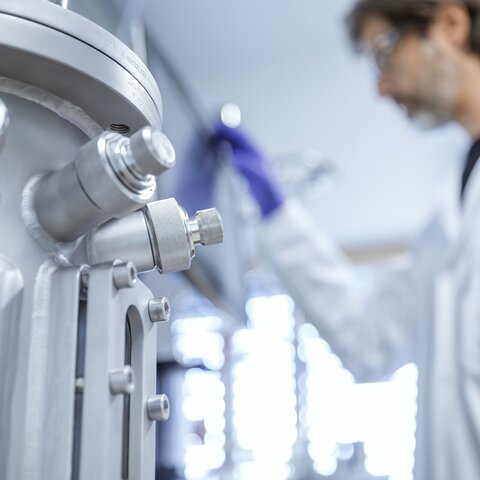
Pichia bioreactor cultivation

Pichia pastoris Fermentation Process Development

Transferable Pichia pastoris protein production processes - developed with manufacturability in mind

Book a meeting

Pichia process development service

At VALIDOGEN, we develop robust and scalable process development strategies for Pichia pastoris (Komagataella phaffii), built for successful industrial implementation from the outset. Powered by our proprietary UNLOCK PICHIA® technology platform, our processes have been successfully transferred to commercial manufacturing, including GMP production at 100,000 L, and industrial-scale fermentation at volumes of up to 200,000 L. These scale-up achievements demonstrate the robustness, transferability, and industrial relevance of our platform across diverse protein production applications, enabling customers to improve process efficiency, ensure consistent manufacturing performance, and optimize production economics at scale.

As an experienced microbial fermentation CRO, VALIDOGEN also provides advanced E. coli fermentation process development and non-GMP protein production services for efficient and scalable recombinant protein manufacturing. 


Building a Robust Process Before You Scale

Starting from established Pichia platform protocols, our fermentation experts design and optimize processes for methanol-free and methanol-induced protein production tailored to your target protein and product requirements. Using tools such as Design of Experiments (DoE) and data-driven process optimization, we systematically improve productivity, process consistency, and scalability while reducing development timelines and technical risk.

From the earliest development stages, scale-up and regulatory considerations are embedded into each project to ensure that results obtained at laboratory scale translate seamlessly to pilot and industrial production. This minimizes length of adaptation period during technology transfer and enables smooth, cost-efficient implementation at large scale.

With more than 15 years of experience in recombinant protein production using Pichia pastoris, VALIDOGEN supports the development of therapeutic proteins, industrial enzymes, food and feed ingredients, and diagnostic proteins through reliable processes designed for consistent quality, manufacturing efficiency, and long-term commercial success. 

Key Benefits of VALIDOGEN's Pichia Fermentation Process Development

Logo of UNLOCK PICHIA
01 Proven at Scale: Up to 200,000 L

With more than 15 years of dedicated Pichia pastoris expertise, and hundreds of customer projects successfully completed, VALIDOGEN combines technology leadership with a proven track record of industrial implementation. Processes developed using our platform have been successfully transferred to GMP manufacturing at 100,000 L and industrial production volumes of up to 200,000 L, enabling reliable commercial manufacturing.

02 Up to 45 g/L Product Titers

VALIDOGEN has achieved recombinant protein titers of up to 45 g/L through targeted strain engineering, fermentation development, and process optimization. Leveraging more than 15 years of Pichia expertise, our team systematically optimizes cultivation conditions, fed-batch strategies, and induction protocols to maximize productivity, space-time yield, and manufacturing efficiency.


03 Up to 5-Fold Titer Improvement

Extensively validated platform protocols, refined through more than 15 years of dedicated Pichia expertise, provide a robust foundation for scalable, high-performance, and cost-efficient Pichia pastoris (Komagataella phaffii) fermentation. By systematically optimizing cultivation conditions, fed-batch feeding strategies, and induction parameters for each production strain, VALIDOGEN has achieved up to 5-fold titer improvements beyond already high-performing platform processes, maximizing productivity while reducing manufacturing costs.

04 Flexible Methanol-Free & Methanol-Induced Expression

VALIDOGEN's proprietary UNLOCK PICHIA® platform supports both methanol-free and methanol-induced Pichia fermentation, enabling the selection of the optimal expression strategy for each protein and manufacturing scenario. The platform combines validated host strains, expression tools, and process development expertise to maximize flexibility, productivity, and process robustness.

05 Tech-Transfer-Ready for Manufacturing

Every project is developed with industrial implementation in mind. VALIDOGEN delivers comprehensive technology transfer packages including process descriptions, development data, optimization rationale, and operating parameters required for efficient implementation by internal manufacturing teams or CMOs, supporting smooth GMP and non-GMP process transfer.

Our approach: From platform protocols to customized processes


Process development projects at VALIDOGEN begin by using our extensively validated platform protocols, a solid foundation for developing high-performance, scalable, and economically viable processes for your specific protein and application. This can be carried out using strains we have developed for you or any Pichia pastoris strain - whether it originates from your laboratory or a third-party source.
Depending on your project needs, our experts can focus on fermentation process optimization for your production strain, characterizing its growth and expression profile. We apply a systematic and data-driven workflow to fine-tune media composition, feeding strategy, and induction parameters, maximizing performance, productivity, and process robustness. Our suite of parallel bioreactors and microbioreactor systems enables rapid iteration and cost-efficient optimization, ensuring an accelerated and tailored process development.

From targeted parameter adjustments to full Design of Experiments (DoE) campaigns, we create fit-for-purpose fermentation processes designed for manufacturability, robustness, and scalability.

 

Fermentation based on platform protocols & non-GMP protein production

Our platform protocols provide reliable starting process parameters and are designed to suit most Pichia pastoris strains. These protocols represent extensively validated and robust starting conditions developed over more than 15 years of Pichia fermentation and process development experience. This initial stage, performed in our 1 L and 10 L bioreactors, delivers solid fermentation performance and enables rapid production of protein samples for early-stage evaluation and analysis.
 

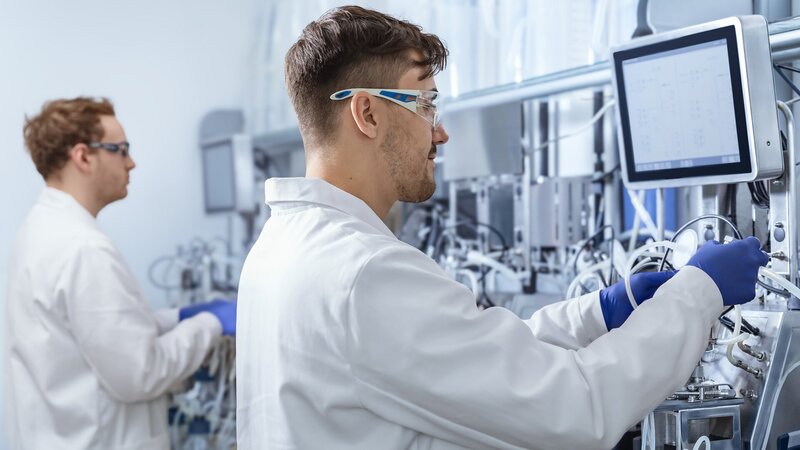
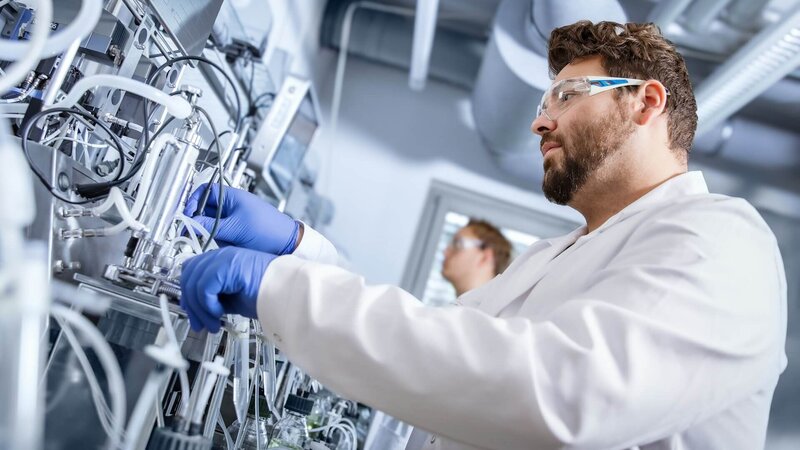
Fermentation scientists in a VALIDOGEN laboratory operating bioreactor systems for protein expression research..
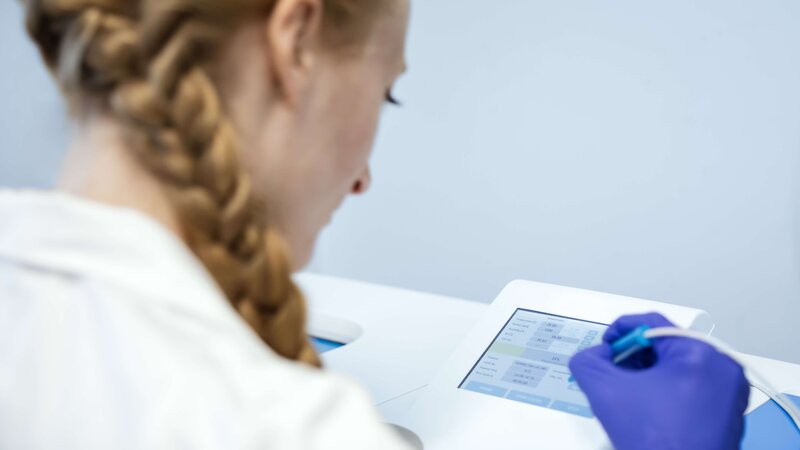
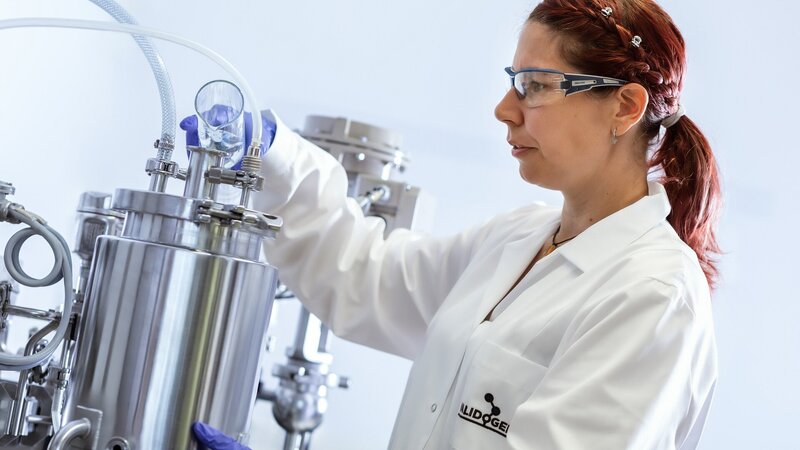
Scientist using microbioreactor technology in Pichia strain development.

Process optimization

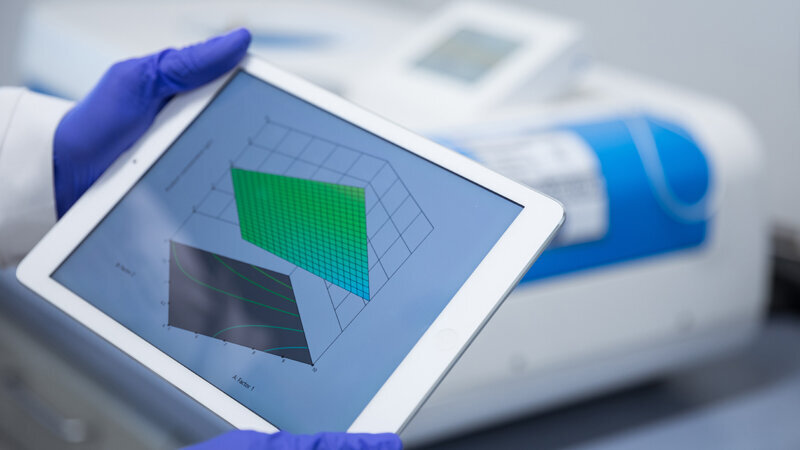
VALIDOGEN’s experts apply customized process optimization to fine-tune cultivation parameters, including media composition, fed-batch feeding strategies, and induction conditions, for your target protein. This approach maximizes productivity, yield, and product quality. Depending on project requirements and objectives, we conduct process optimization ranging from targeted one-parameter-at-a-time studies to comprehensive Design of Experiments (DoE) programs, ensuring the optimal balance between experimental depth, efficiency, and outcome. By systematically optimizing key fed-batch fermentation parameters, we establish robust, scalable processes that support reliable technology transfer and industrial manufacturing.
 

Process characterization and process understanding

VALIDOGEN generates foundational process knowledge aligned with Quality by Design (QbD) principles, supporting the definition of critical process parameters (CPPs) and critical quality attributes (CQAs) while establishing a well-characterized basis for scale-up and technology transfer.
 

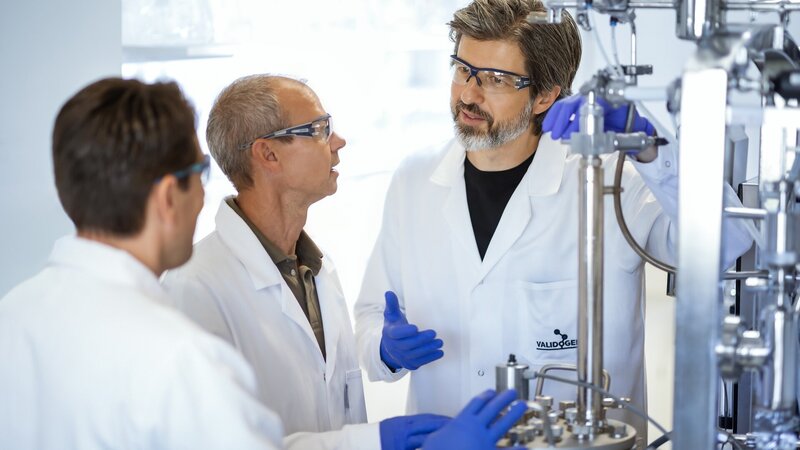
VALIDOGEN fermentation specialists working in a fermentation laboratory at VALIDOGEN.

Validation of process robustness and reproducibility

Our process development program establishes process robustness and reproducibility from the earliest stages. To verify consistency and reliability, we perform multiple confirmation runs that demonstrate process stability under defined cultivation conditions. This ensures reproducible performance across bioreactor batches and provides a well-characterized, scale-up-ready process before technology transfer.

Scale-up & tech transfer support

Processes at VALIDOGEN are designed for seamless scale-up and GMP readiness, supporting smooth translation to pilot and industrial production with minimal process modifications. VALIDOGEN-developed processes have been successfully implemented at up to 100,000 L for GMP processes and up to 200,000 L for industrial enzyme production, demonstrating their robustness, scalability, and transferability at commercial manufacturing scale. When you are ready to scale, VALIDOGEN provides comprehensive technology transfer support, including detailed process documentation, scale-up guidance, development and optimization data, and the rationale for the final process design. Remote consultation and, where required, on-site support help ensure smooth CMO implementation, reduce technology transfer risk, and support reliable commercial production.
 

Protein purification process development

To complement upstream fermentation, VALIDOGEN offers comprehensive protein purification process development.
In close collaboration with our customers, we optimize chromatography steps, determine binding capacities, and maximize yield and purity while ensuring efficient impurity clearance.
This integrated upstream and downstream development approach enables high-quality, scalable, and cost-efficient protein production across all applications and industry sectors.
 

KEY FEATURES

Technology
  • Established platform processes and extensive experience for successful optimization
  • Design of Experiment tools for efficient parameter scouting and full DoE process
  • Methanol-induced and methanol-free protein production processes
  • Boosted space-time yields through optimized VALIDOGEN fermentation protocols
  • Cultivation in 1 L or 10 L bioreactors
Deliverables
  • Robust, optimized, scalable, and transferable processes and cultivation protocols
  • Full documentation to support regulatory filings
  • Support for process transfer to desired facility

Frequently Asked Questions about Pichia Fermentation Process Development

What are the benefits of early process development?

Early development enables you to optimize strain performance and fermentation conditions before moving into scale-up or expensive GMP environments. At VALIDOGEN, this work is supported by the proprietary UNLOCK PICHIA® technology platform as a proven basis for robust and scalable Pichia process development. This approach reduces tech transfer risk and ensures a smoother, more cost-efficient transition into manufacturing.

What if I already have a Pichia strain – can you optimize the fermentation for it?

Yes. Even if the strain was developed elsewhere, we can apply our expertise in Pichia fermentation to optimize expression levels, productivity, and process robustness. This often results in significantly higher yields and lower costs compared to unoptimized processes.

Will processes developed in your labs scale to manufacturing scale?

Yes. Our development is always performed with scalability in mind. Processes optimized in our labs are designed to transfer smoothly to industrial fermentation facilities, maintaining productivity and product quality at large scale. VALIDOGEN-developed processes have been successfully scaled to GMP processes of up to 100,000 L and to industrial enzyme production of up to 200,000 L.

Up to which scale do you work? Are you a GMP facility?

We develop processes at scales up to 10 L bioreactors. VALIDOGEN is not a GMP facility - instead, we deliver tech-transfer-ready processes that can be handed over to your selected CDMO for GMP manufacturing. We have undertaken many such transfers.

What makes a process “tech-transfer-ready” for a CDMO?

A tech-transfer-ready process is one that has been well characterized and optimized, with robust fermentation conditions, reproducible performance, and thorough documentation. This ensures that a CDMO can implement the process at larger scale without additional major development steps.

Beyond Pichia, does VALIDOGEN support process development for other microbial hosts?

Yes. VALIDOGEN is best known for its expertise in Pichia pastoris protein expression using the proprietary UNLOCK PICHIA® platform, which remains our core technology for recombinant protein production.

Building on more than 15 years of microbial bioprocess development experience, we also support clients with protein production, fermentation optimization and downstream purification for other microbial hosts, including E. coli. This complementary capability enables us to support a broader range of microbial protein production processes while maintaining our strong specialization in Pichia-based expression systems.


What types of proteins has VALIDOGEN developed Pichia fermentation processes for?

VALIDOGEN has developed Pichia pastoris (Komagataella phaffii) fermentation processes for a wide range of recombinant proteins, including antibody fragments such as vHHs/nanobodies, vaccine antigens, peptide hormones, growth factors and cytokines, serum proteins, therapeutic and industrial enzymes, as well as food and feed proteins. This broad experience enables tailored processes for high titers, product quality, robustness, and scalable manufacturing.

Can methanol-free Pichia fermentation match the productivity of methanol-induced processes?

Yes. Methanol-free expression has been an established capability at VALIDOGEN for more than 15 years and has been commercially implemented in bioreactors of up to 200,000 L. VALIDOGEN's third-generation methanol-free promoters have substantially increased productivity: using generic, non-optimized 1 L bioreactor protocols, supernatant titers exceeding 20 g/L have been achieved across several protein classes. These results show that methanol-free expression can match, and in selected cases exceed, the performance of classical methanol-induced systems, while avoiding the operational, safety, and regulatory considerations linked to methanol induction. These titers can then be further increased through dedicated process development.

How much can process development improve Pichia fermentation titers?

VALIDOGEN has achieved up to 5-fold titer improvements beyond already high-performing platform processes, maximizing productivity while reducing manufacturing costs. Substantially. VALIDOGEN's case studies show how systematic process development moves a Pichia process from a functional baseline to manufacturing-ready performance. In one methanol-induced bivalent VHH project an increase from 21 g/L to 31 g/L titer was reached just through process development. Two further case studies document methanol-free production optimized for maximum product titer and space-time yield (STY).


Also working with E.coli

VALIDOGEN also supports non-GMP protein production and fermentation process development for E. coli - built on 15+ years of experience in microbial protein expression.

Get in Touch - Discuss your Pichia process development project

Iskandar Dib, PhD
Principal Scientist & Business Development Manager
Rosie Maddock, PhD
Business Development Manager

VALIDOGEN's expert team is happy to discuss your process development project and help find the right solution. Send any project related requests to project@validogen.com, directly to our scientists, book a meeting, or use our contact form.

Get in touch