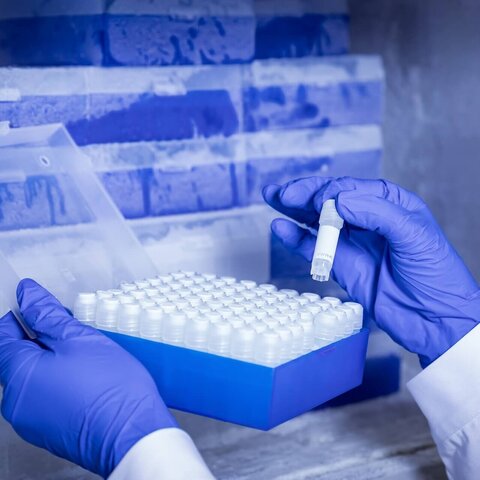
Gloved hands holding a cryobox with frozen sample vials in front of a frosted freezer wall; one vial is being retrieved

Therapeutic Protein Production in Pichia pastoris for Biopharma

CMC-ready Pichia pastoris production strains and robust processes designed for safe, scalable clinical manufacturing of recombinant protein therapeutics

Book a meeting

VALIDOGEN develops Pichia pastoris (Komagataella phaffii) expression systems and production processes for therapeutic proteins and biologics. We de-risk the development of recombinant protein therapeutics with our proprietary UNLOCK PICHIA® platform. By integrating manufacturability, product-quality requirements and scalable process development from the earliest project stages we help prevent late-stage process changes, clinical batch failures and avoidable regulatory revalidation.

From expression feasibility and high-performance production strain development to robust fermentation development and downstream process development, VALIDOGEN builds pre-GMP-ready production processes designed for efficient transfer into clinical and commercial manufacturing.
 

Why Pichia pastoris for the production of biopharmaceutical proteins

As a eukaryotic microbial host, Pichia pastoris (Komagataella phaffii) supports protein folding and post-translational modifications, secretes product into the medium simplifying downstream processing, and is naturally free from endotoxins and viruses. All of which makes it well suited for many recombinant therapeutic proteins. Several FDA- and EMA-approved biopharmaceuticals are produced using Pichia, with many more candidates in clinical pipelines. The yeast also enjoys GRAS (Generally Recognized as Safe) status for food applications and is listed on the EFSA QPS (Qualified Presumption of Safety) list, confirming its safety profile.

Pichia pastoris offers several advantages for biologics development

01 Eukaryotic Protein Processing for Functional Therapeutic Proteins

As a eukaryotic microbial host, Pichia pastoris supports protein folding, disulfide bond formation, and post-translational processing that can be essential for the biological activity, stability, and functionality of complex recombinant proteins. This makes Pichia particularly relevant for therapeutic proteins that require a more advanced folding environment than bacterial systems typically provide.

02 Efficient Secretion to Support Downstream Processing of Biologics

Pichia pastoris can secrete recombinant proteins into the culture supernatant, helping to simplify product recovery and reduce the complexity of downstream processing. Efficient secretion can support higher product purity at harvest, reduce process burden, and improve the overall efficiency of purification process development. For biopharmaceutical programs, this can contribute to more streamlined process development and improved manufacturability.
 

03 High Productivity with Microbial Process Efficiency

Pichia combines the advantages of microbial fermentation with the ability to produce eukaryotic proteins. High-cell-density cultivation, short process cycles, and strong expression capacity enable attractive space-time yields and cost-efficient recombinant protein production. For biologics developers, this can provide an alternative to more time- and cost-intensive production systems.

04 Naturally Virus- and Endotoxin-Free Production Host

Pichia pastoris is naturally free from endotoxins and viral contaminants. This can provide important advantages for biopharmaceutical protein production compared to bacterial or mammalian expression systems. The absence of endotoxin burden can simplify downstream process considerations, while the microbial nature of the host supports efficient, controlled, and scalable fermentation.

Recombinant therapeutic protein classes produced with Pichia pastoris

Pichia pastoris can be used for the production of a broad range of recombinant proteins for biopharmaceutical development and therapeutic applications. Through target-specific strain engineering and tailored process development, the Pichia platform can also support the expression of challenging or difficult-to-express proteins where microbial efficiency and eukaryotic protein processing are beneficial.

Relevant therapeutic protein classes include
  • Antibody fragments, such as VHHs/sdAbs, scFvs, Fabs and other non-IgG antibody formats
  • Therapeutic enzymes requiring efficient folding, secretion, and scalable production
  • Cytokines, growth factors, and signaling proteins for biologics development
  • Vaccine antigens and recombinant immunogenic proteins
  • Serum proteins and fusion proteins
  • Diagnostic-grade proteins and assay components for biopharma-related workflows

Why biopharma companies choose VALIDOGEN and UNLOCK PICHIA® 

CMC readiness and reduced development risk

UNLOCK PICHIA® is a fully documented platform. Strains and processes are developed with manufacturability, product quality and scale-up in mind and supported by comprehensive documentation, helping streamline regulatory submissions and reduce the risk of late-stage process redesign, clinical manufacturing delays and costly revalidation.

Clinical-stage experience

Proteins produced with UNLOCK PICHIA® have advanced into Phase I and Phase II clinical studies, demonstrating the platform’s suitability for regulated biopharmaceutical development.

Maximized titer and process productivity

Through targeted strain and process optimization VALIDOGEN has achieved record-breaking titers of up to 45 g/L. A bivalent VHH case study demonstrates VALIDOGEN’s approaches for maximization of titer, space-time-yields and productivity tailored to different production requirements.

Glycoengineering capabilities

Advanced glycoengineering tools support the development of tailor-made glycoproteins with product quality attributes aligned with the intended therapeutic application.

Methanol-free and ARMs-free options

VALIDOGEN offers methanol-induced and methanol-free expression systems as well as antibiotic-resistance-marker-free production strains.

Scalable, manufacturing-ready processes

UNLOCK PICHIA® technology has been implemented in GMP processes at scales of up to 100,000 litres, providing a strong foundation for commercial manufacturing.

Efficient technology transfer

Comprehensive transfer packages include process descriptions, development data, operating parameters and optimization rationale for implementation by internal teams or CDMOs.

How VALIDOGEN supports your biopharma project

Access Integrated Expertise from Gene to Manufacturing-Ready Process

VALIDOGEN combines expression feasibility assessment, production-strain engineering, fermentation development, downstream process development, small-scale protein production and tech-transfer & scale-up within one integrated workflow. This continuity reduces handover risks and accelerates progression from an initial protein candidate to a robust, pre-GMP-ready production process.

Frequently asked questions about Pichia for biopharma

Can VALIDOGEN develop just the Pichia process for my therapeutic protein?

Yes. Whether you already have a Pichia production strain or need VALIDOGEN to develop one, we design and optimize scalable fermentation processes for recombinant biopharmaceuticals, ready for technology transfer, scale-up and GMP manufacturing at your selected CMO or CDMO.

Why choose Pichia pastoris for therapeutic protein production instead of CHO or E. coli?

Pichia pastoris is a commercially validated platform that combines microbial productivity with eukaryotic folding and secretion. It is suited for a wide range of protein classes including cytokines, growth factors, enzymes, recombinant antigens and VLPs, antibody fragments such as Fab, scFv and VHH formats, and selected serum and fusion proteins.

It is not a universal replacement for CHO or E. coli, but a strong alternative when product quality, scalability and production economics fit the molecule. Target-specific strain development and tailored process development can enable the production of challenging or difficult-to-express proteins.

Do you develop Pichia strains and processes for antibody fragments and VHHs?

Yes. Pichia pastoris is an established host for antibody fragments such as VHHs/sdAbs, and VALIDOGEN develops high-performance production strains and scalable processes for these formats. See our VHH production case study for a documented example of UNLOCK PICHIA® strain and process optimization.

Can VALIDOGEN develop a methanol-free Pichia strain and process for my biopharmaceutical?

Yes. VALIDOGEN has more than 15 years of experience with methanol-free Pichia expression and develops high-performance strains and scalable processes without methanol induction. Performance is comparable to - and in some cases exceeds - methanol-induced systems, while simplifying process handling and facility requirements and supporting robust scale-up and GMP manufacturing.

How do I decide between methanol-induced and methanol-free expression for my therapeutic protein?

For biopharmaceutical programs, the optimal strategy depends not only on expression performance but also on product quality, process robustness, scale-up requirements and compatibility with the intended GMP manufacturing site. VALIDOGEN can evaluate methanol-induced and methanol-free systems in parallel to identify the option that best balances productivity, product quality and manufacturability for your clinical development and CMC strategy.

Can you provide non-GMP material and support GMP manufacturing transfer?

Yes. VALIDOGEN can supply non-GMP protein for analytical, formulation and preclinical studies. We also deliver technology-transfer-ready processes for implementation by your selected CDMO/CMO and have successfully supported numerous transfers into GMP manufacturing.

Discuss your biopharma protein project

Speak to our protein expression experts

Iskandar Dib, PhD
Principal Scientist & Business Development Manager
Rosie Maddock, PhD
Business Development Manager

Developing a recombinant therapeutic protein or scaling up a Pichia production process? Send any project related requests to project@validogen.com, directly to our scientists, book a meeting, or use our contact form.

Get in touch